Boarding School Syndrome or Neurodivergence?
May 14, 2026
I often meet clients whose partners, or they themselves, suspect they may be neurodivergent. Autistic, perhaps, because they struggle to express their feelings. Or ADHD, because they cannot seem to sit still, are always on the go, and feel compelled to be busy and productive at all times.
For years, I struggled with this presumption. I understood the profound impact that being sent away at a young age has on the developing mind. Growing up in an institution causes children to shut down emotionally. It creates difficulties with emotional regulation. Constant busyness is a learnt, enforced strategy: a survival response, not a neurological trait. I really see how the boarding school environment trains children to present in ways that now look, from the outside, like neurodivergence.
However, then one of my daughters was diagnosed with ADHD and I learnt that a child with a parent with ADHD has a roughly 50% chance of having it. Hmmmm.....
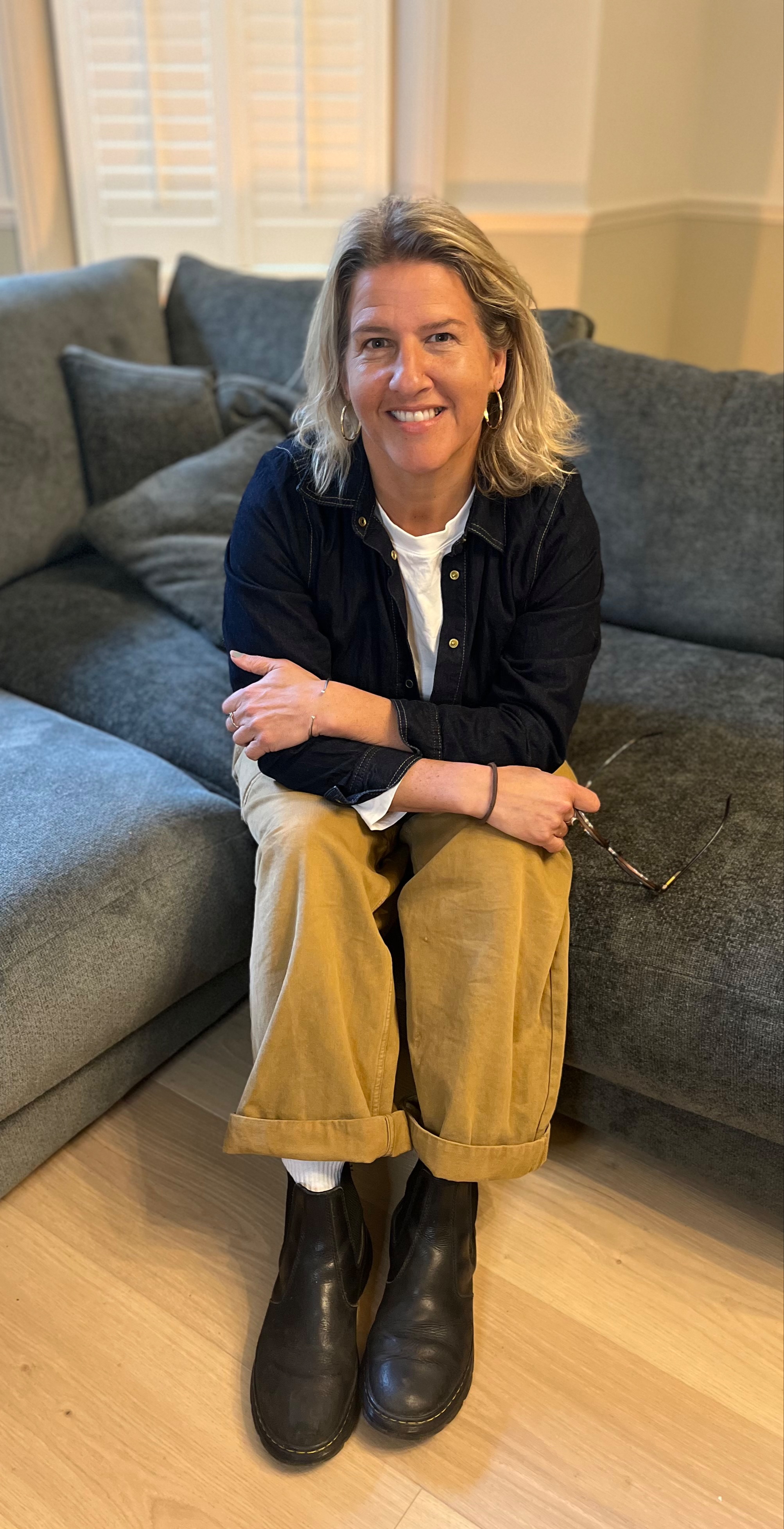
It became clear to me, as I supported her through the assessment process, that I ticked every box myself. I put my name on the waiting list more out of curiosity than conviction, and did not think too much about it. Two years later, in February 2025, my name came up. I met with a psychiatrist and I received a formal diagnosis of ADHD.
Many people seem to have an opinion about how many people receive a diagnosis these days, and I was one of them. "Everyone has ADHD these days" is something I hear often. However, I now dispute that. A thorough psychiatric assessment goes far deeper than whether you lose your keys or are messy. Many of the questions I was asked focused on patterns of behaviour when I was very young and also well before boarding school, which confirmed to me that what I was carrying was not solely the result of my school experience. Interestingly, my own mother was asked to reflect on my early childhood behaviour as part of the assessment. Her response was: "But aren't all these things normal?" She is yet to receive her own diagnosis. It is, clearly, a family thread.
Receiving the diagnosis still came as a shock, even though part of me had expected it. What followed was months of reflection: looking back over my whole life with new eyes. Awareness, grief, shame, anger, and eventually acceptance. I had spent years attributing so many of my behaviours to boarding school, because the overlap is so striking. The diagnosis invited me to look again, and to sit with the harder question of how my life might have looked had I known sooner.
I began to see the pattern clearly. Moved schools at seven for "naughty behaviour" because I could not sit still, though for me, as a girl, this showed up as constant talking and distraction. Told at fifteen that I might not achieve the five GCSEs needed to stay at my boarding school and that perhaps I should consider leaving. That conversation came out of nowhere and quietly devastated me. I had never once considered I might not pass. I felt rejected, not good enough, and despite going on to achieve nine GCSEs all above a C, I left anyway, with my head down. It took decades, and therapy, to understand why the teachers may have drawn that conclusion.
I can see now what was happening. I was always being sent to the back of the class for talking. I could not sit still or sustain attention. Even now, my children get mildly exasperated with me when I cannot stay on the sofa watching television for too long without poking them or fidgeting: my nervous system seeking a dopamine hit, trying to regulate itself. That would have been happening throughout my entire time at school.
Getting an ADHD diagnosis, much like discovering Boarding School Syndrome, can provoke an existential reckoning. Who am I? Which parts of me are character, and which are neurodivergence? It has felt, in many ways, like a coming out. For me, it is perimenopause that made the masking no longer possible, which is increasingly recognised as a significant factor in why so many women are receiving this diagnosis later in life.
The Connection with Boarding School Syndrome
One of the most significant modules in my Healing Beyond Boarding School programme focuses on trauma and Complex PTSD. Complex PTSD is a response to prolonged, repeated trauma, particularly when that trauma occurs in childhood and within relationships or institutions where the person had little power or agency. What I recognise in many of the former boarders I work with is that they show clear signs of this.
Here I think is where it gets clinically interesting: many of the behavioural symptoms of Complex PTSD closely mirror those of ADHD and autism. Difficulty with emotional regulation, hypervigilance, an inability to settle, problems with attention and concentration, a sense of disconnection from self. People may recognise themselves in the descriptions of neurodivergence, when what they are actually living with is the neurological impact of prolonged childhood trauma. People are less keen to recognise that....especially when going to boarding school is seen as a privilege.
My own view, and I want to be transparent that this is a clinical hypothesis grounded in my experience rather than empirical research, is that for many former boarders, Complex PTSD has shaped and rewired the brain in ways that show up as what I would call an acquired neurodivergence. This is not to dismiss the possibility of ADHD or autism. Some people will have both: a genuine double layer of neurodivergence and Complex PTSD. However, for others, the diagnosis they are seeking may lie somewhere different.
On the Value of Understanding Yourself
I used to be sceptical of diagnosis. I did not really see the point. What I know now is that it has been genuinely transformational, not just for how I see myself, but for all of my relationships.
It has allowed me to make sense of myself. To lift the shame I carried about certain behaviours. To accommodate my own needs with less of an apology. I am more prone to burnout than many and get overwhelmed by the constant motor in my head. I need regular physical movement simply to be able to sit in a chair and do my work. Every now and then you may find me dropping to the floor to do a press up or a handstand or make a noise and now you will understand why. These are not eccentricities. They are my nervous system doing what it needs to do.
Understanding this has also changed how the people closest to me respond to me, which matters enormously. Above all, it has been about replacing self judgement with understanding, awareness and compassion. That, I think, is always worth pursuing. I may struggle more with sensory overload, and I also have the ability to have a million different ideas for courses and workshops. My brain does operate in a different way to others. No better, no worse, just different. The same can be said for those who grow up in Boarding School. We do feel and see the world differently. How could we not if we are broght up in an institution. No, better, no worse, just different.
I’ve created a a 60-minute specialist workshop normally covered in my programmes that goes into this in much more depth that is available online. So, If you are curious about any of this, you can find the worshop hat I include on my course available to purchase here - Am I neurodivergent or is this the impact of Boarding School?